The Challenge
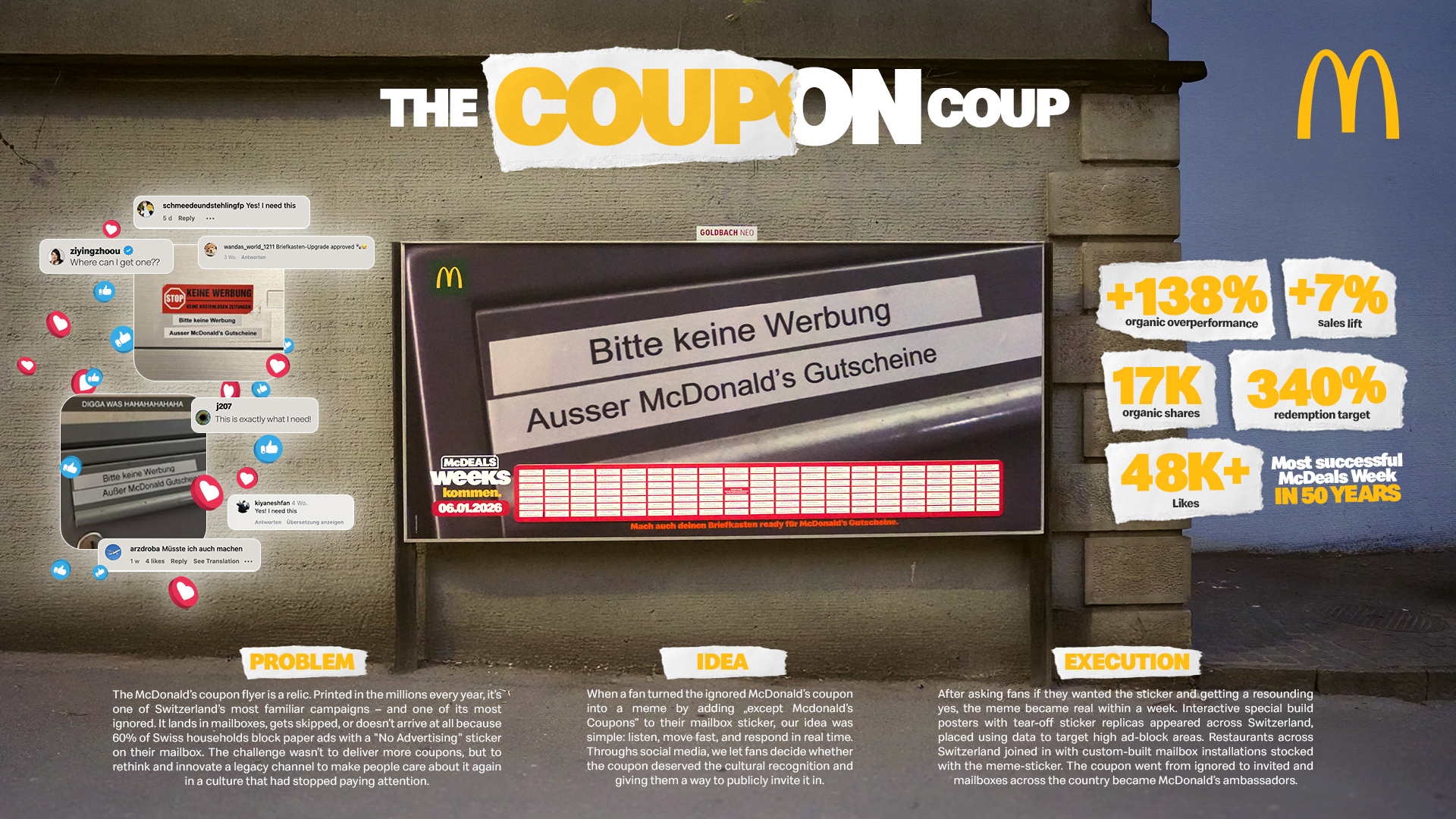
In Switzerland, McDonald’s runs the country’s largest coupon campaign, distributing around 8 million printed flyers each year. For decades, these coupons have been a familiar part of Swiss households and a key driver of restaurant visits. However, the media landscape has changed. Around 60% of Swiss households place “no advertising” stickers on their mailboxes to block unaddressed mail, reflecting a strong cultural preference for controlling what enters the home and reducing paper advertising. This creates a paradox for McDonald’s. While the coupons are widely loved and drive visits, the very system designed to reduce advertising clutter increasingly prevents them from reaching people. At the same time, mailbox stickers are a highly recognizable cultural symbol in Switzerland. They represent a clear boundary between private space and advertising and are part of everyday urban life. When a fan posted a modified version of the sticker online reading “No advertising. Except McDonald’s coupons,” it immediately resonated because it humorously challenged that familiar rule. The meme revealed a cultural truth: people may reject advertising in general, but they still make exceptions for brands they genuinely value. For McDonald’s, this created the perfect moment to respond. By turning the meme into a real sticker and making it publicly available, the brand gave people a simple way to voluntarily invite McDonald’s coupons back into their mailbox.
The Solution
McDonald’s responded in real time, asking fans if they wanted the sticker. Tens of thousands said yes. Within a week, the meme became media. Interactive OOH posters with tear-off stickers and custom mailbox installations in restaurants allowed people to take the sticker home and place it on their mailbox. By letting people actively invite the coupons back, the campaign transformed a blocked channel into a voluntary media space for McDonald’s.