The Challenge
India’s oral care category is dominated by problem-solution brands focused on cavities and protection, with one toothpaste typically chosen for the entire family, often by the mother as gatekeeper. As a challenger brand, Closeup has always stood apart with a focus on freshness, dialing into younger consumers who influence household purchase decisions. This creates a dual challenge: staying relevant in a function-first category while earning a spot in a single-toothpaste household. Compounding this, Closeup’s spicy mint flavor is distinctive and polarizing, loved by some, rejected by others, making adoption tougher in a family setting where taste must be widely acceptable. At the same time, Gen Z in India is turning bold, extreme flavors into performative culture, where the more intense the experience, the more shareable it becomes. Flavor is no longer just consumed; it is tested, filmed, and talked about, making intensity a driver of participation, not rejection. This cultural behavior unlocked a way forward. Instead of softening its polarizing taste, Closeup leaned in, amplifying its sensorial hit by translating its iconic spicy mint into edible experiences. By shifting from a product you use to a flavor you could see, taste, and share, the brand stepped into food culture. What was once a barrier became a talking point, making Closeup’s flavor relevant, desirable, and influential enough for younger consumers to drive its way into the household.
The Solution
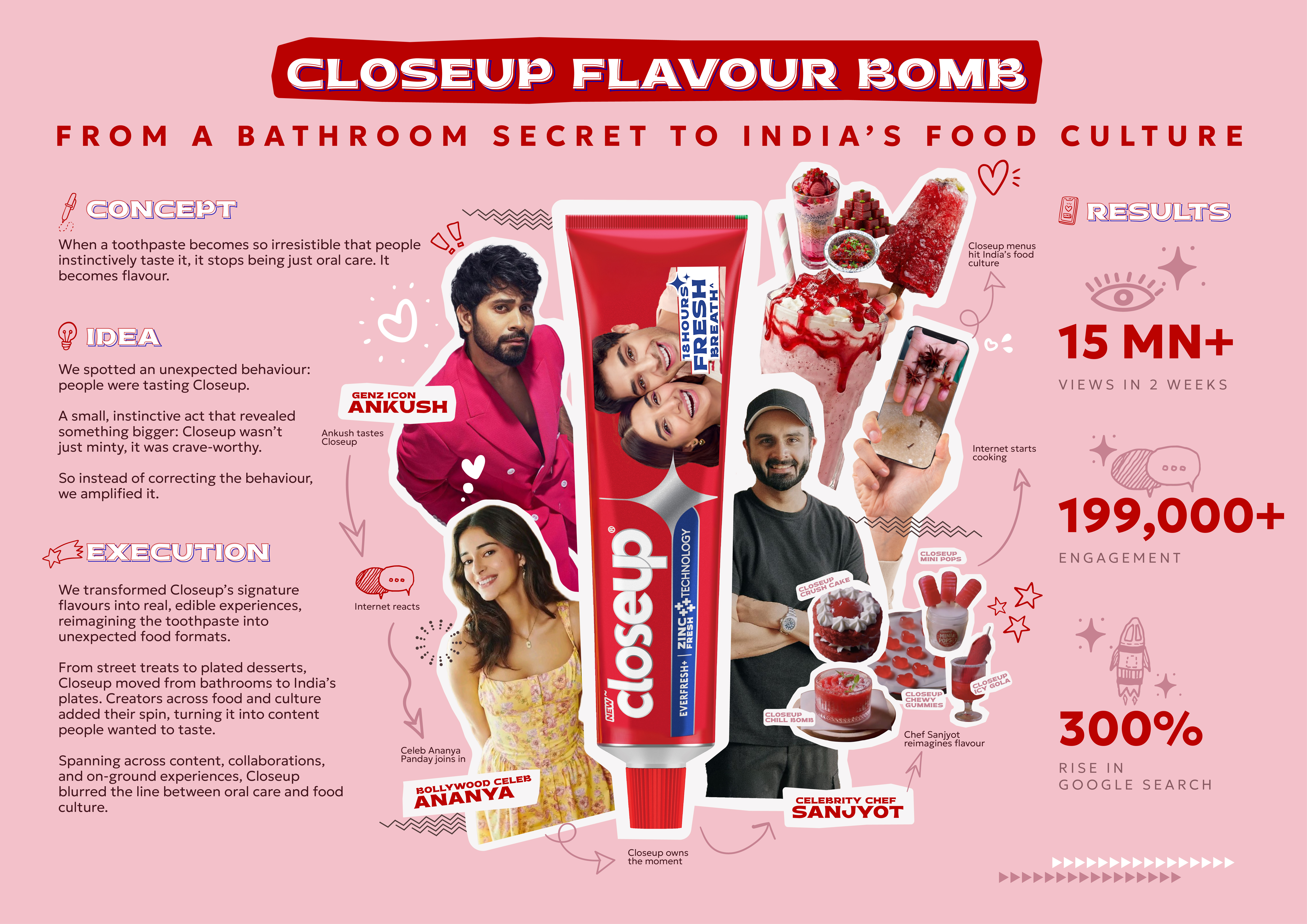
The idea was to take a behavior with no language, the instinctive lick of Closeup, and make it visible, shareable, and culturally relevant by anchoring it in its cold, spicy, minty hit. Instead of inventing a message, the work surfaced a closeted act and reframed it as a sensory experience worth reacting to. It began with disruption. A spontaneous moment by Ankush Bahuguna broke expected content norms, triggering immediate recognition and debate. As audiences acknowledged the behavior, their participation sustained attention. The idea then crossed boundaries. Ananya Panday legitimized it socially, while Sanjyot Keer translated the same sensorial hit into edible formats, making it tangible and replicable. Finally, it entered India's street food culture, where new flavors rarely break through yet are tasted and accepted. From private instinct to public participation, the work turned Closeup’s flavor into a cultural phenomenon.