The Challenge
We partnered with Turkish Airlines to unlock the full potential of one of its strongest assets: being the airline that flies to more countries than any other. While this claim is powerful and credible, we recognized that in the travel category, destinations are often communicated through the same predictable lens—polished skylines, iconic landmarks, and imagery audiences have seen countless times. In such a saturated landscape, our challenge wasn’t just to showcase scale, but to make that scale feel fresh, culturally relevant, and engaging for a global audience. We identified a key cultural shift: the way people relate to places had evolved. Increasingly, destinations weren’t being described with words, but expressed through emojis—a fast, visual, and universally understood language. Emojis had become a shared cultural code across borders, yet they remained largely confined to digital screens. This led us to a dual challenge: how could we break away from category clichés while communicating Turkish Airlines’ unmatched global network in a way that feels contemporary? And how could we tap into a behavior that already exists in people’s everyday lives, across cultures and geographies? To solve this, we realized we needed to rethink not just how destinations are shown—but how they are recognized.
The Solution
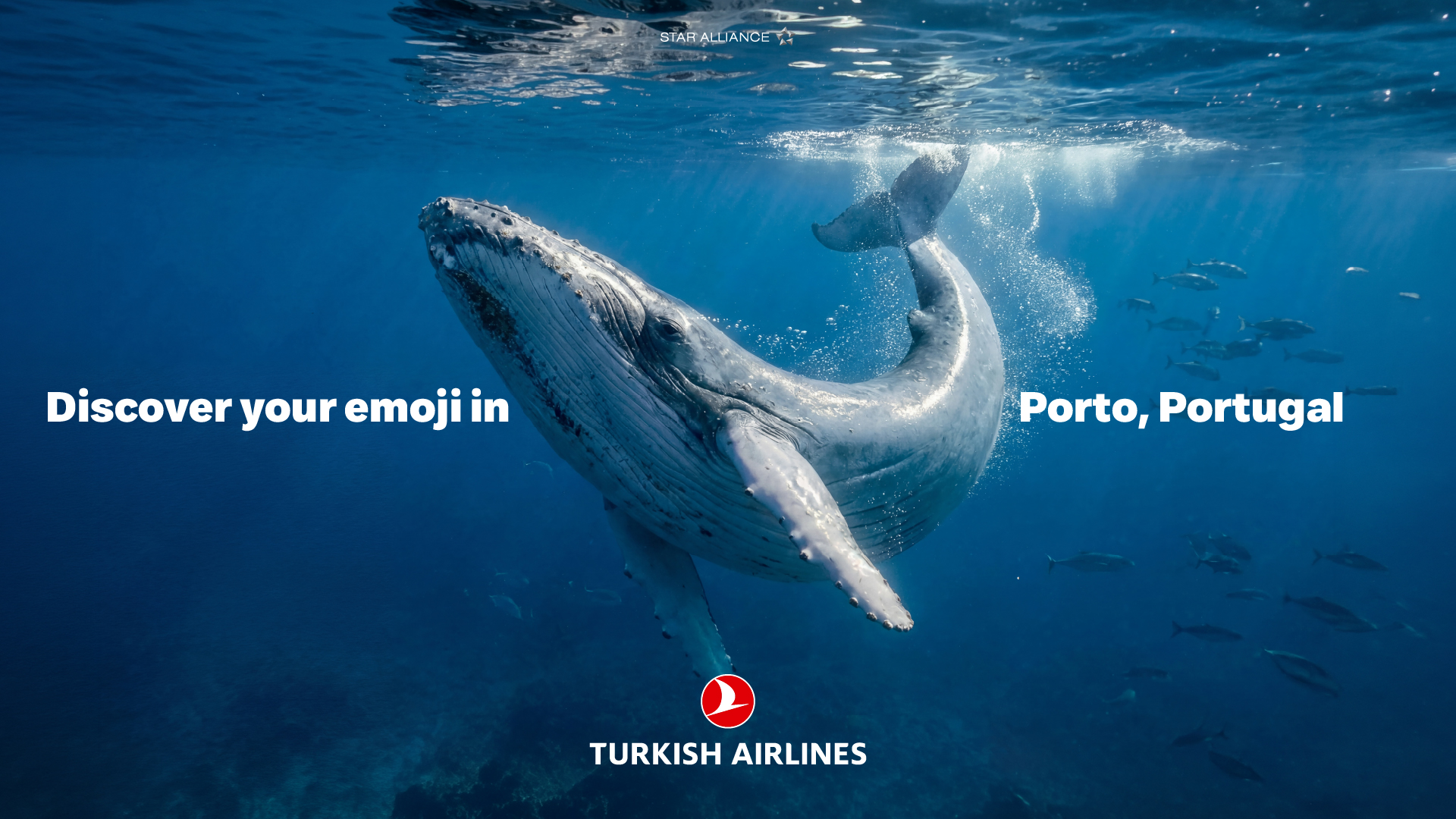
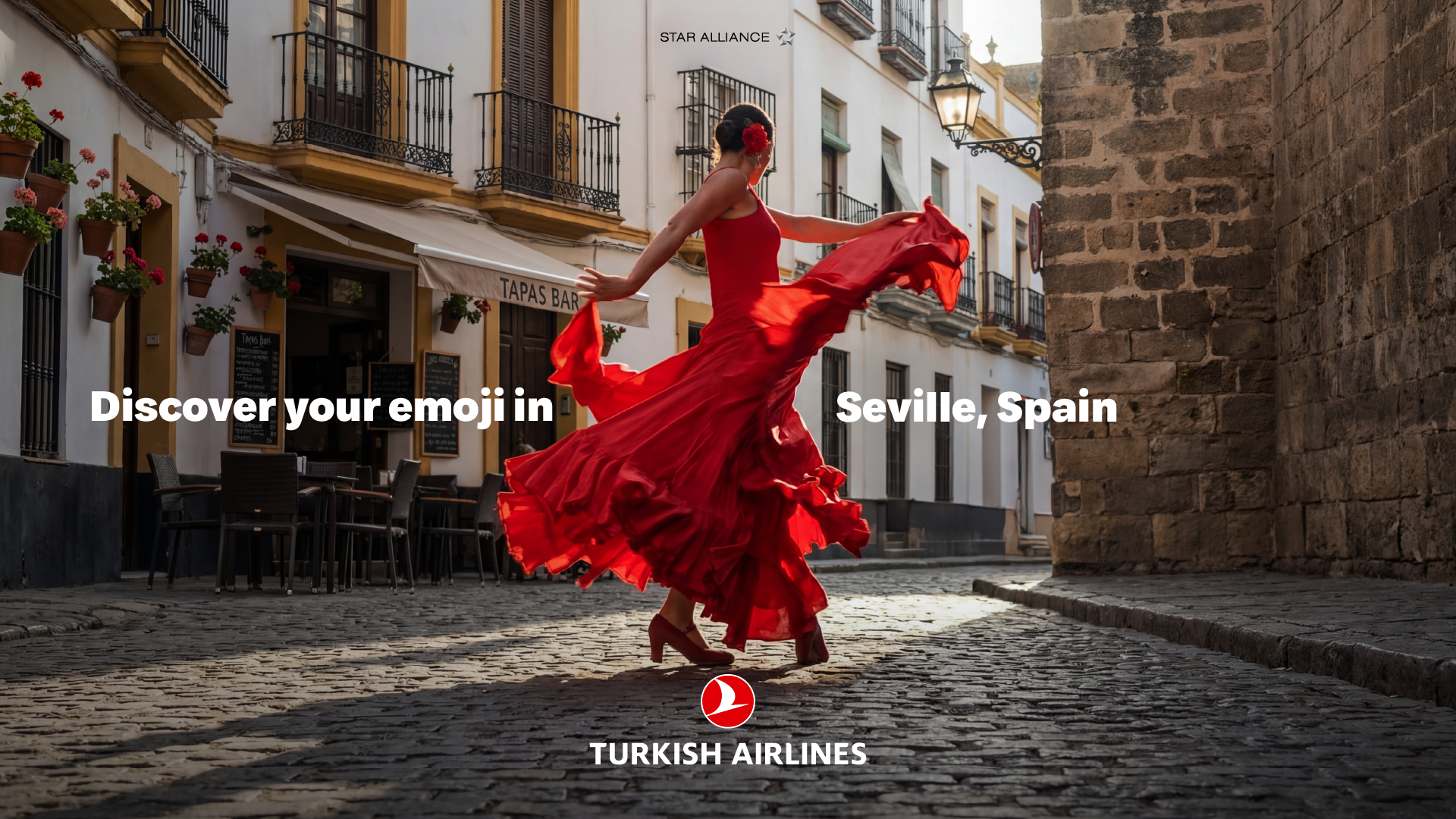
We transformed the world’s most universal digital language into a real-world travel experience for Turkish Airlines. We took everyday emojis and mapped them to real destinations within the airline’s extensive network—turning familiar symbols into places you can actually visit. Each destination was reimagined and communicated purely through emojis, eliminating the need for words, translations, or traditional travel imagery. We launched the idea in outdoor, inviting people to decode cities through emoji sequences: a skyline, a meal, a cultural icon—each represented through simple, recognizable symbols. What began as a moment of curiosity quickly evolved into an interactive experience, transforming passive viewers into active participants. By doing this, we disrupted the visual language of the travel category and made Turkish Airlines’ global scale instantly understandable in a human, culturally relevant way. Instead of telling people where they could go, we invited them to discover it themselves through a language they already use every day. By bridging digital behavior with physical travel, we reframed destinations as something already familiar—yet waiting to be experienced in real life. Because the emojis we carry in our pockets are no longer just symbols; they are destinations waiting to be discovered with Turkish Airlines.