The Challenge
By 2023, 2degrees faced a reputation problem that went beyond market dynamics. The third-place telco had launched "Fighting for Fair" in 2019 with early success, but as competitors increased spending, 2degrees' share of voice dropped from 21% to 15%. Smaller players were now challenging on price—the very pillar of their fairness positioning—threatening to commoditize the brand entirely. The real issue wasn't the duopoly. It was that 2degrees had painted themselves into a corner: fairness meant low prices, and low prices were increasingly table stakes, not differentiation. Meanwhile, research revealed an uncomfortable truth for a telco: smartphones were damaging young people's mental health and shrinking attention spans. If 2degrees genuinely stood for making New Zealand "a fairer place to live," they had to confront the unfair outcomes their own products were creating for teenagers. This wasn't a problem to avoid—it was an opportunity to redefine what "fairness" meant for the brand. By addressing smartphone safety, 2degrees could expand their fairness reputation beyond price into something more meaningful: positive cultural change. They'd move from competing on cost to competing on conscience. The strategic gamble: Stand for something that mattered more than a promotional price tag in a category where no one was willing to wade into this cultural conversation.
The Solution
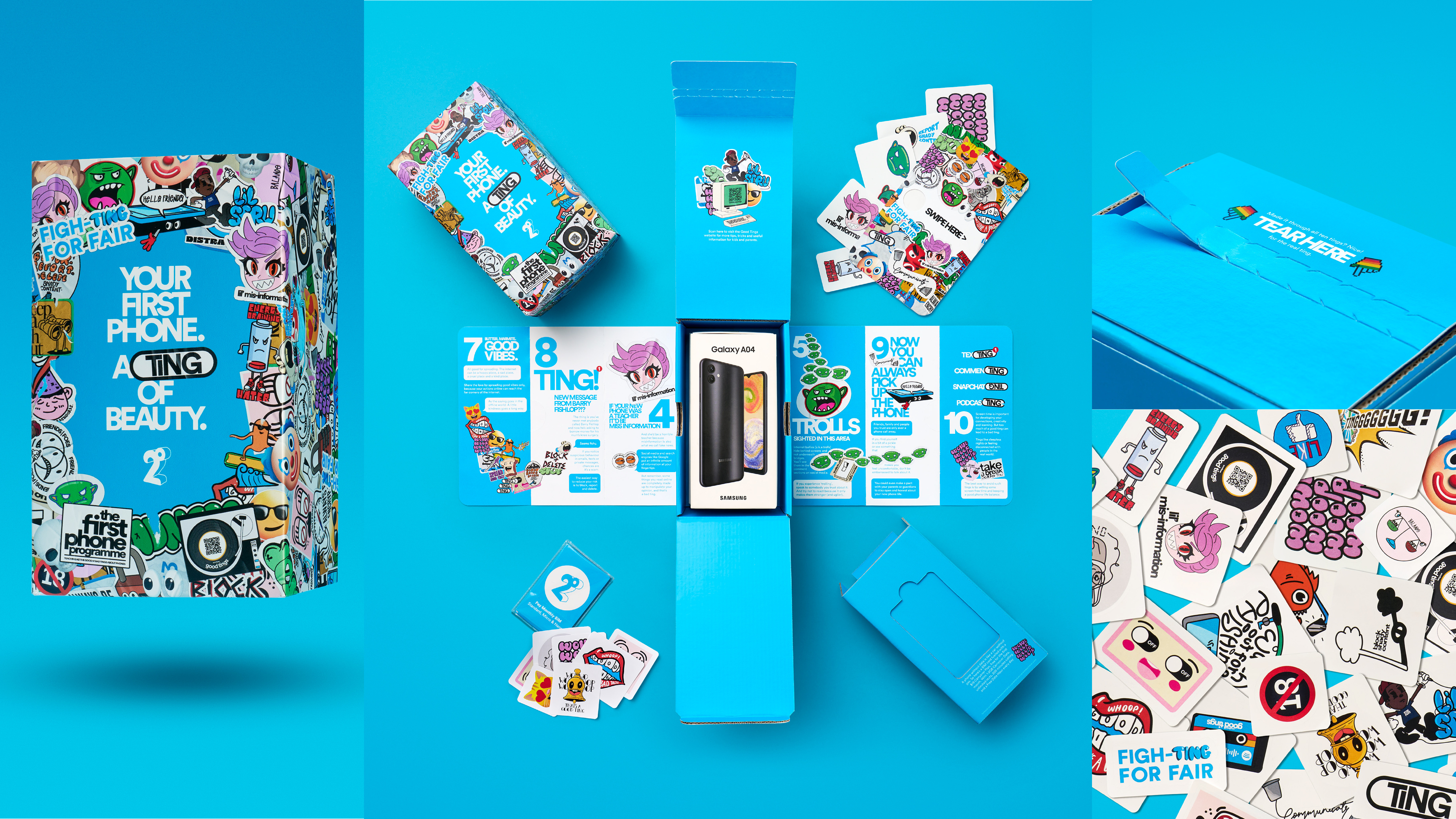
We helped 2degrees and Netsafe rethink how families talk about phone safety by creating “Good Tings”—the world’s first first phone program. Our insight was simple: the moment a child receives their first phone is the most important opportunity to shape healthy digital habits. So instead of lecturing, we transformed the unboxing experience itself into a learning tool—where every tear, fold, and reveal delivered lessons on online safety. Inside the package, we included ten core safety principles, a family phone contract, collectible prompts, and scannable content tied to a custom track by Scrufizzer, using the language and tone of youth culture to explain “good tings” and “bad tings.” The experience was integrated directly into retail, making safety part of the natural purchase journey. We amplified the idea through streaming platforms, school-area media, PR, and music channels—meeting families where they already consume content. The result was a culturally relevant, non-preachy approach that made phone safety feel as intuitive as the device itself—driving a +25% uplift, +22% YoY customer acquisition, and significant increases in brand perception around social responsibility and online safety leadership.