The Challenge
McDonald’s Netherlands set out to strengthen its position as a culturally and personally relevant icon brand - one that doesn’t just serve food but creates lasting emotional connections and “fans forever.” To achieve this, the brand needed to tap into authentic, local behaviors that reflect how Dutch consumers actually interact with McDonald’s in their daily lives. However, this posed a strategic challenge. The Netherlands is a country defined by order, structure, and efficiency. Its infrastructure is meticulously planned, with optimized routes for walking, cycling, and driving. In theory, movement is predictable and rational - leaving little room for spontaneity or emotional decision-making in how people navigate their environment. Yet McDonald’s is inherently an impulse-driven brand. Visits are often unplanned, driven by sudden cravings that demand immediate satisfaction. The tension, therefore, lays in reconciling a highly structured physical environment with the unpredictable, emotional nature of consumer behavior. Traditional advertising claims around convenience or desirability would not be enough to stand out in such a context, nor would they feel distinctly local or culturally grounded. The key challenge was to find a way to demonstrate McDonald’s desirability through real, observable behavior - something that could break through the rigidity of Dutch infrastructure and reveal a more human truth. McDonald’s needed to prove that its brand was not just part of the system, but powerful enough to disrupt it. The question became: how can McDonald’s show that when cravings strike, people don’t just follow the rules - they rewrite them?
The Solution
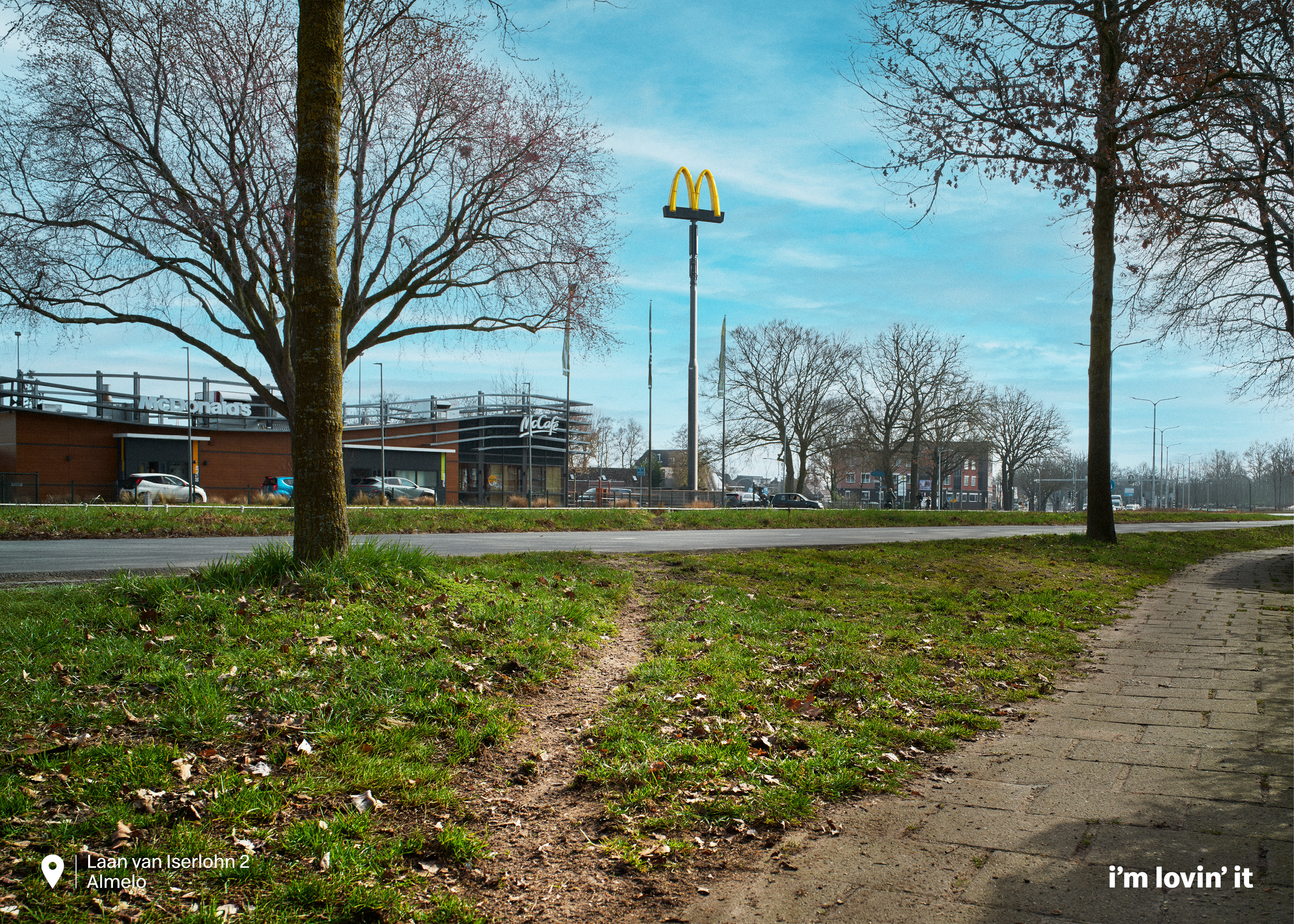
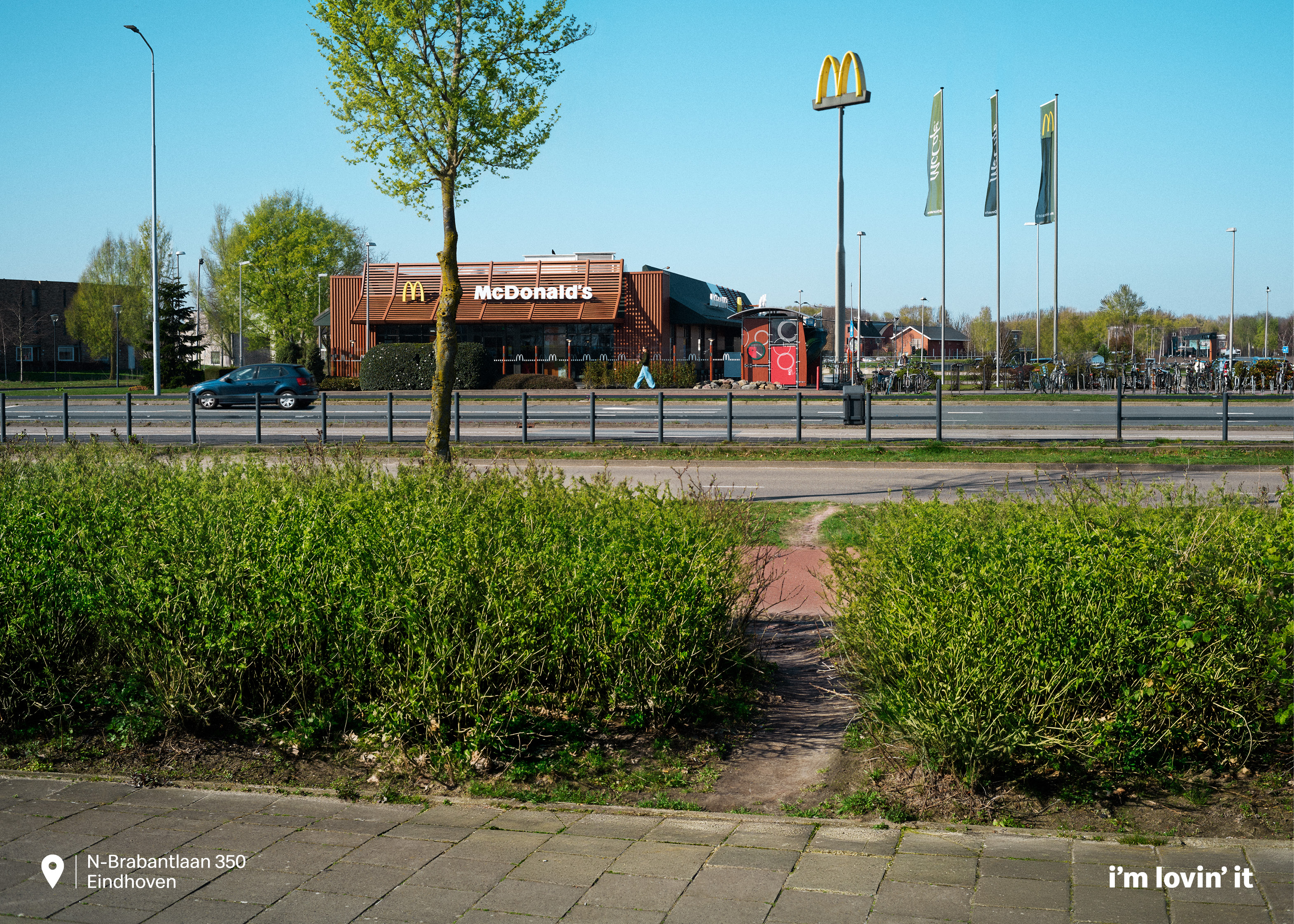
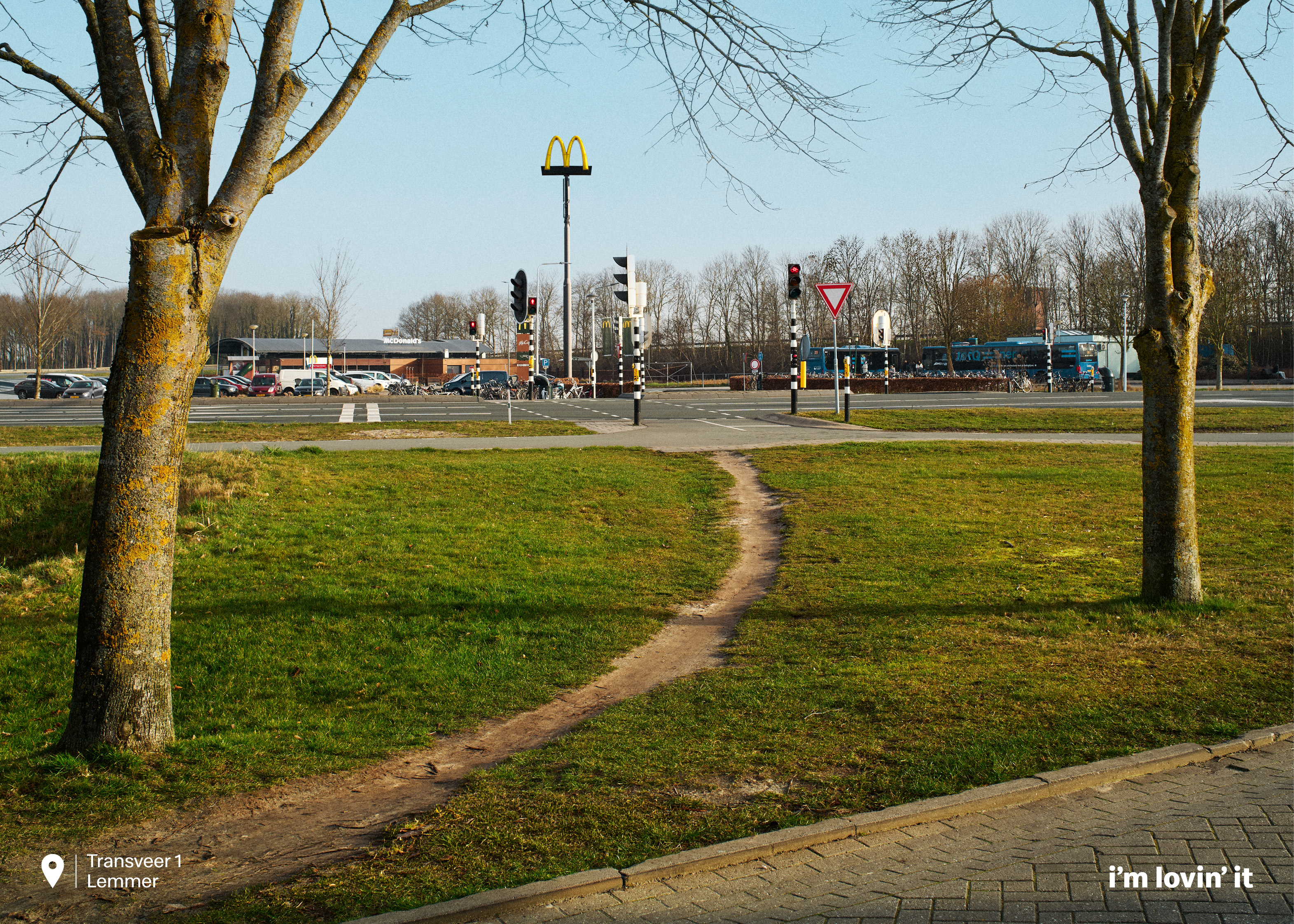
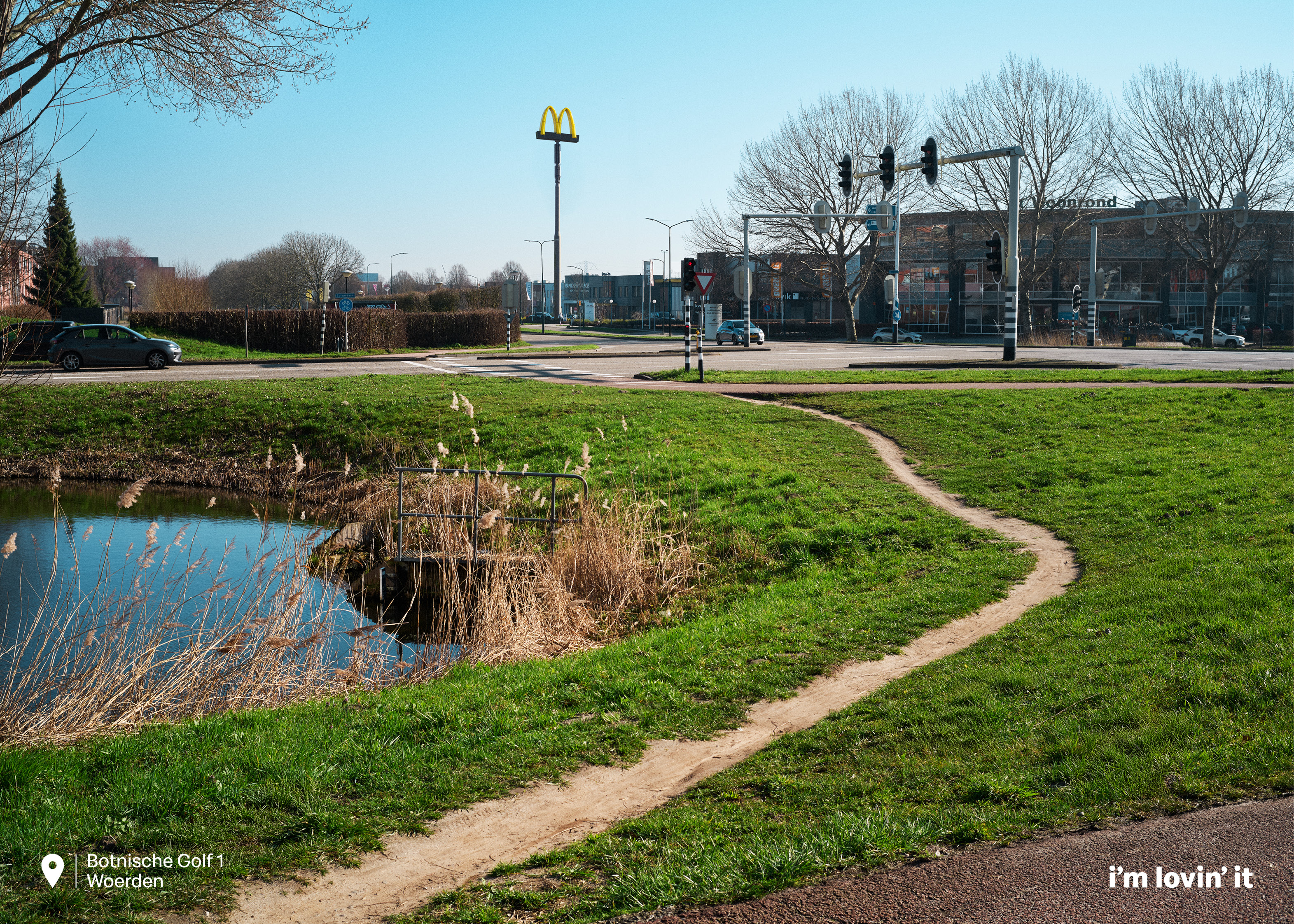
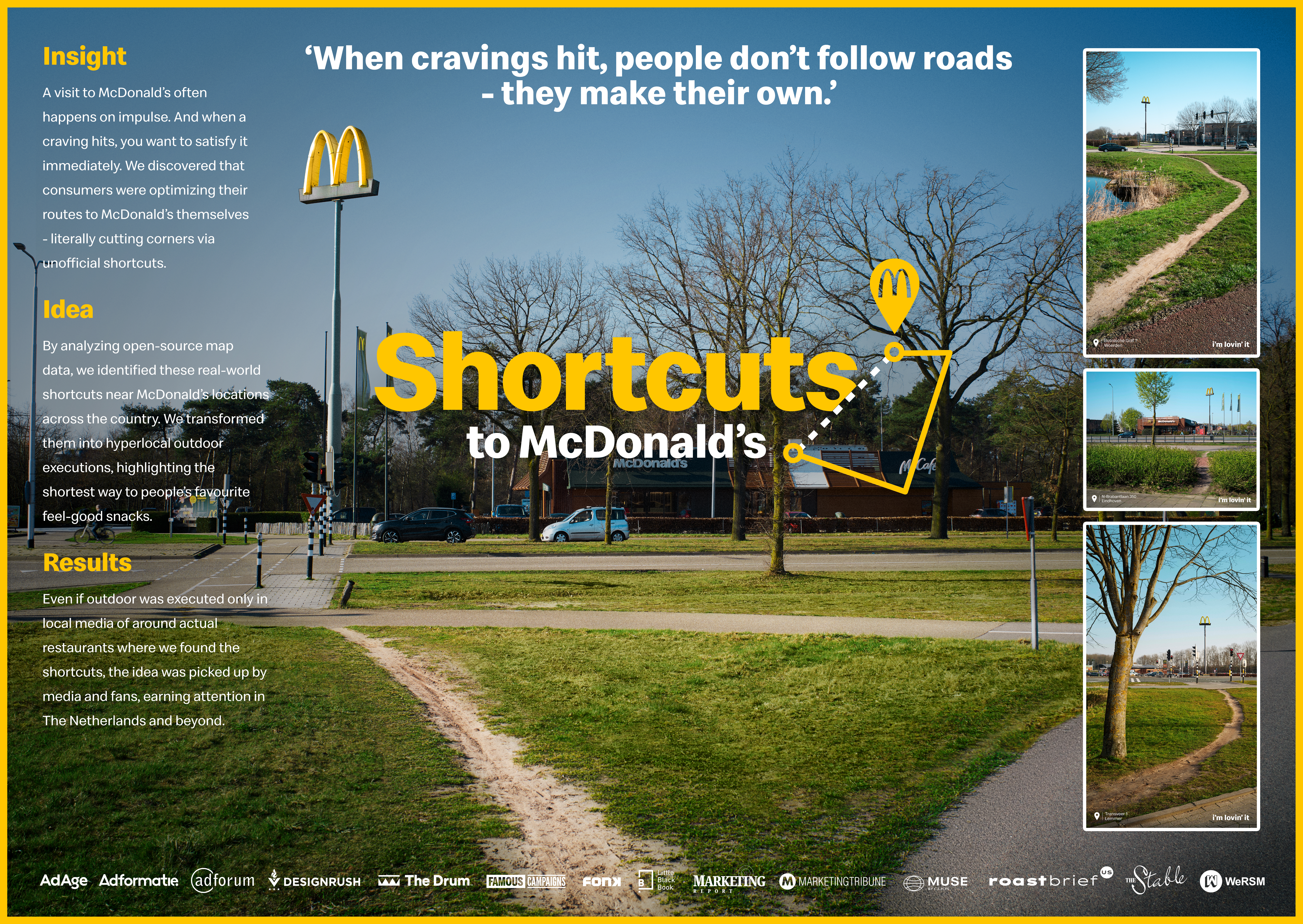
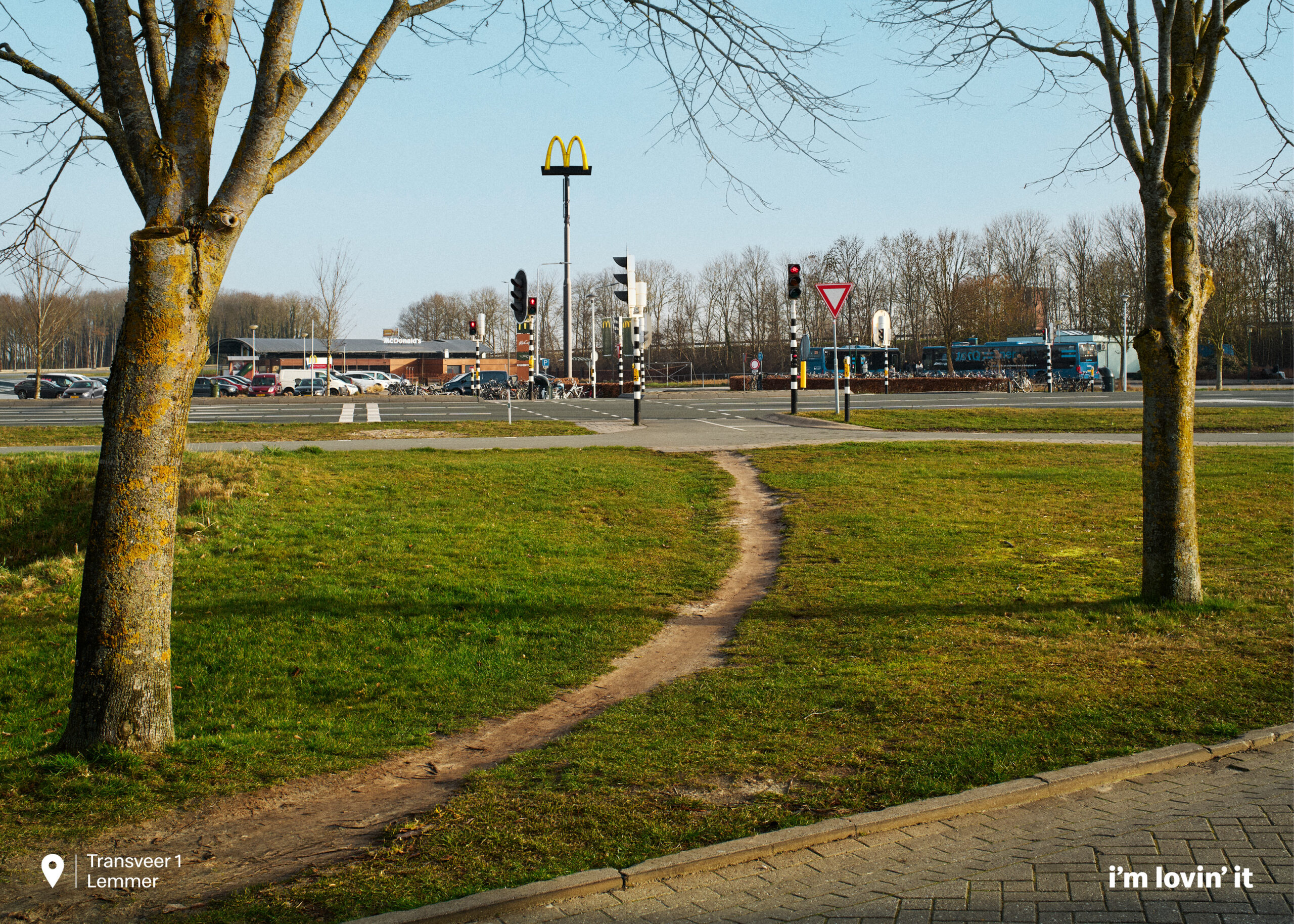
The solution was found not in changing behavior, but in revealing it. Across the Netherlands, people unconsciously create “olifantenpaadjes” - informal shortcuts formed when individuals repeatedly choose faster, more direct routes over official paths. These desire paths are physical proof of collective behavior overriding planned infrastructure. By analyzing open-source map data, McDonald’s discovered that many of these shortcuts appeared near its restaurants. This insight unlocked a powerful and authentic idea: when people crave McDonald’s, they don’t follow the road - they create their own. Instead of making conventional claims, McDonald’s turned these real-world shortcuts into media. The brand identified specific desire paths and transformed them into hyper-local print and OOH, highlighting the most direct routes using the exact paths people had carved out themselves. No explanation, no embellishment - just the thing, revealed. This is where iconicity comes in. McDonald’s is an iconic brand, but its strength lies in how effortlessly that status is recognized. When executed with simplicity and purity, its iconicity becomes self-evident. You don’t need a line - you just get it when you see it. By elevating everyday behavior into communication, the campaign positions McDonald’s again and again as an icon brand, paying tribute to its fans. It doesn’t claim love; it proves it. Real behavior becomes undeniable evidence - making desire visible, immediate, and culturally meaningful.