
The Challenge
For over a century, photography has been journalism's most powerful tool in establishing truth and accountability. Today, that trust is under attack. As AI-generated images flood the internet, the line between fact and fiction grows dangerously thin, often with real-world consequences. Viral AI fakes are everywhere: from the Pope in a Balenciaga puffer jacket to the Hollywood sign engulfed in flames. And these aren't just quirky internet hoaxes. They represent a genuine crisis of perception. By 2024, over half of Americans reported struggling to distinguish authentic photos from AI-generated ones. The stakes are enormous: misinformation undermines journalism's credibility, erodes public trust, and ultimately threatens democracy itself. When people can't trust what they see, they can't trust institutions built on evidence and documentation. For Columbia Journalism Review, the field's most trusted watchdog, staying silent wasn't an option. The organization needed to act decisively. The challenge wasn't just to warn people about AI-generated images, but to do so in a way that would actually resonate, stick in people's minds, and empower them with practical tools to identify fakes.
The Solution
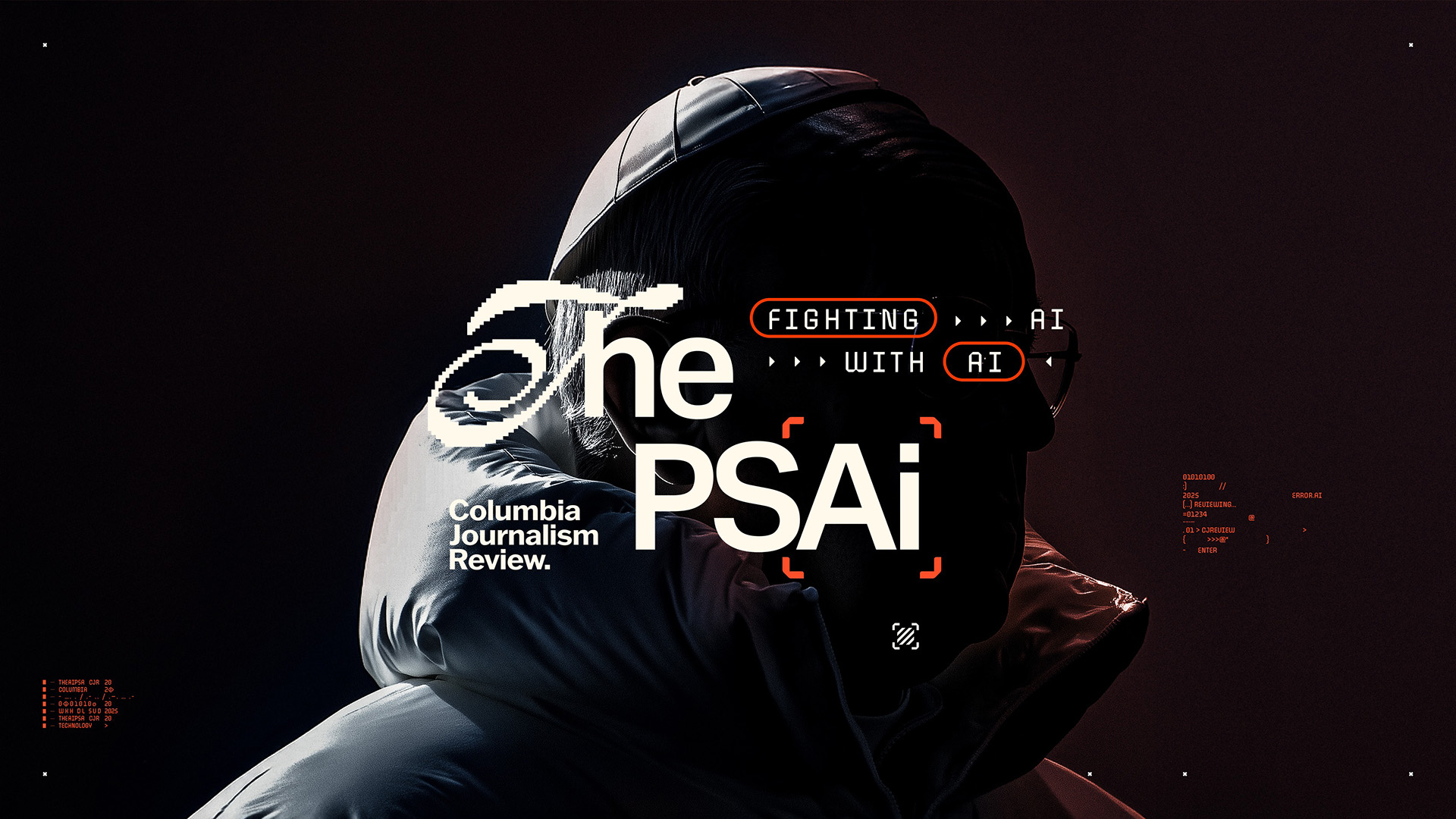
Columbia Journalism Review fought fire with fire: using AI against itself to expose AI's weaknesses. The PSAi is a music video featuring the internet's most viral AI images, acting as an entertaining yet educational tool that teaches millions how to spot fakes. The campaign started by identifying AI-generated images that had already reached millions: a girl paddling through Hurricane Helene's floodwaters, Katy Perry "attending" the Met Gala, and others. Each was selected because it had genuinely misled people at scale. Using generative video models, the team animated these static images and added human performance through facial mapping to lip-sync characters precisely to lyrics. Rather than a dry, somber PSA, the team created an original song in a playful, 90s-inspired rap style that felt nostalgic, entertaining, and designed to grab attention while delivering genuine value. Every verse included specific, actionable tips and visual cues to spot AI red flags: extra fingers, overly smooth faces, unnatural lighting, perfectly symmetrical hair, warped background faces, and distorted words or logos. The campaign evolved beyond a single film. After launch, every new viral fake was hijacked and reanimated to spread the message, making each new AI fabrication part of the growing PSAi library. The team also built a website where people could explore practical tips for distinguishing real from fake. By weaponizing AI creatively, the campaign transformed what had endangered journalism into a tool that now protects it. It demonstrated that innovation, not fear, could address the challenge of AI misinformation.